

Global Tensions and the Investor Mindset: Navigating an Uncertain World
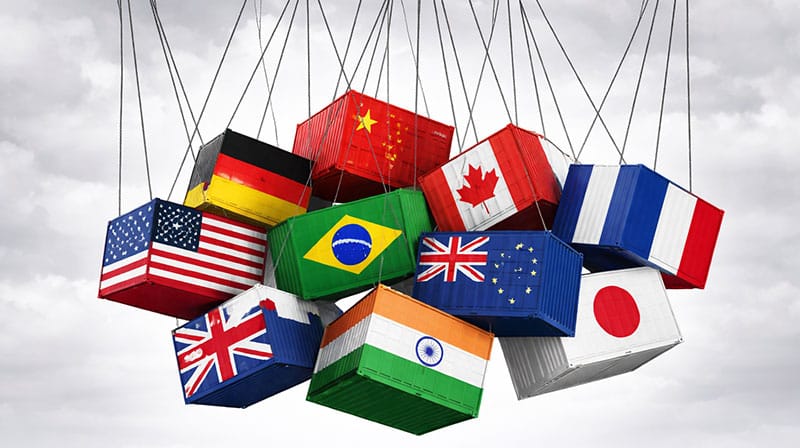
We are living in a time where geopolitics is no longer a background consideration for investors—it is front and centre.
From ongoing conflicts in Eastern Europe and the Middle East, to rising tensions between major global powers like the United States and China, the investment landscape has become increasingly shaped by forces that sit well outside traditional economic indicators. Add in trade disputes, tariffs, and a growing push toward economic nationalism and it’s clear: global tensions are now a permanent feature of the market environment.
So what does this mean for investors?
First, volatility is no longer episodic—it’s structural. Markets are reacting not just to earnings and interest rates, but to headlines. A single development—whether it’s a sanctions announcement, military escalation, or a shift in trade policy—can move markets quickly and sometimes irrationally. This creates short-term noise, but also long-term opportunity for disciplined investors.
Second, supply chains are being reshaped. Companies are increasingly prioritizing resilience over efficiency, moving production closer to home or diversifying across regions. While this reduces geopolitical risk, it can also lead to higher costs and persistent inflationary pressures. For investors, this reinforces the importance of owning businesses with pricing power and strong balance sheets.
Third, we are seeing a shift in global leadership and alliances. The world is becoming more fragmented, with blocs forming around shared economic and political interests. This has implications for currency stability, commodity pricing, and global growth patterns. Canadian investors, in particular, need to be mindful of how our resource-heavy economy is impacted by these shifts—especially in energy, agriculture, and critical minerals.
Where does opportunity lie?
Despite the uncertainty, there are clear areas of opportunity. Defense spending is rising globally, benefiting companies in aerospace and security. Energy security has re-emerged as a priority, supporting both traditional energy producers and the transition toward renewables. Meanwhile, sectors tied to domestic infrastructure and reshoring trends are gaining momentum.
At the portfolio level, diversification has never been more important. Geographic diversification helps reduce overexposure to any one region’s political risks. Fixed income is once again playing its traditional role of stabilizing portfolios, particularly in periods of equity drawdowns. Alternatives—such as private credit and real assets—can offer additional protection through low correlation to public markets.
How we are helping our clients navigate this environment
In periods like this, advice matters more than ever.
Our team is focused on building portfolios that are not only positioned for growth, but designed to withstand uncertainty. We do this through a disciplined and proactive approach:
- True diversification across asset classes, geographies, and investment styles, reducing reliance on any single outcome or region
- Incorporating high-quality fixed income and alternative investments to help stabilize returns and protect against drawdowns
- Actively monitoring global developments and making tactical adjustments where appropriate, rather than reacting emotionally to headlines
- Focusing on best-in-class businesses with strong balance sheets, durable cash flows, and the ability to navigate inflationary and geopolitical pressures
- Maintaining consistent communication with our clients, ensuring they understand not just what we are doing—but why
We recognize that uncertainty can create anxiety. Our role is to bring clarity, structure, and confidence to the investment process—so our clients can stay focused on their long-term goals.
The key takeaway
Global tensions are not something investors can predict or control—but they can prepare for them.
The most successful investors today are those who stay focused on long-term fundamentals while building portfolios that are resilient to a wide range of outcomes. That means owning high-quality assets, maintaining proper diversification and avoiding the temptation to react emotionally to short-term events.
In times like these, discipline is your greatest advantage.
Because while the world may feel more uncertain, well-structured portfolios—and the right advice—are built to navigate exactly that.
Written By: Duane Francis
Posted in The Francis Forum